Kitesurfing & Kiteboarding in Puerto Escondido: Conditions, Spots & Lessons
Puerto Escondido is world-famous for its waves. What gets mentioned less is that it also gets wind — not always, not predictably, but when it arrives it combines with that Oaxacan Pacific coastline in a way few destinations can match. Kitesurfing here isn't for everyone. It's a niche sport in a niche corner of a niche activity. But for those who know what they're looking for, it's worth understanding properly.
This guide isn't going to sell you Puerto Escondido as the kite paradise it isn't. It's going to tell you exactly what to expect: when the wind blows, where it blows, what level you need to be, what schools operate in the region, and what the nearby alternative looks like if what you want is consistent wind for a full week.

The Wind Reality at Puerto Escondido
Start here, because this is the most important thing: Puerto Escondido is not a consistent wind destination. Unlike La Ventosa — about 200 km southeast near Salina Cruz, which ranks among the windiest places on earth and has near-year-round season — Puerto Escondido gets kiteable wind roughly five times a year. That's what historical wind data shows.
The most favorable window is November through February. During these months the northerly wind — the same system that brings winter swell to the beaches — can produce 20–30 knot sessions lasting one or two days at a time. In summer (June to September), patterns shift: winds become more erratic, and the storm energy that creates the best surfing waves makes conditions unpredictable for kite.
What this means practically: if you travel to Puerto Escondido specifically to kitesurf, you're gambling. If you travel for everything else the destination offers — waves to watch, nature, food, the Oaxacan Pacific — and kite is a possibility you add when wind appears, the equation changes completely.

The Spots: Where to Kitesurf Around Puerto Escondido
La Barra de Colotepec
The most interesting kite spot in the area and the one offering the greatest variety of conditions. La Barra is the mouth of the Colotepec River, where the river forms a lagoon and estuary before meeting the Pacific. This creates something unusual on this coast: the possibility of relatively flat water inside the lagoon for those practicing maneuvers without wave, and direct ocean access for wave kiting just meters away.

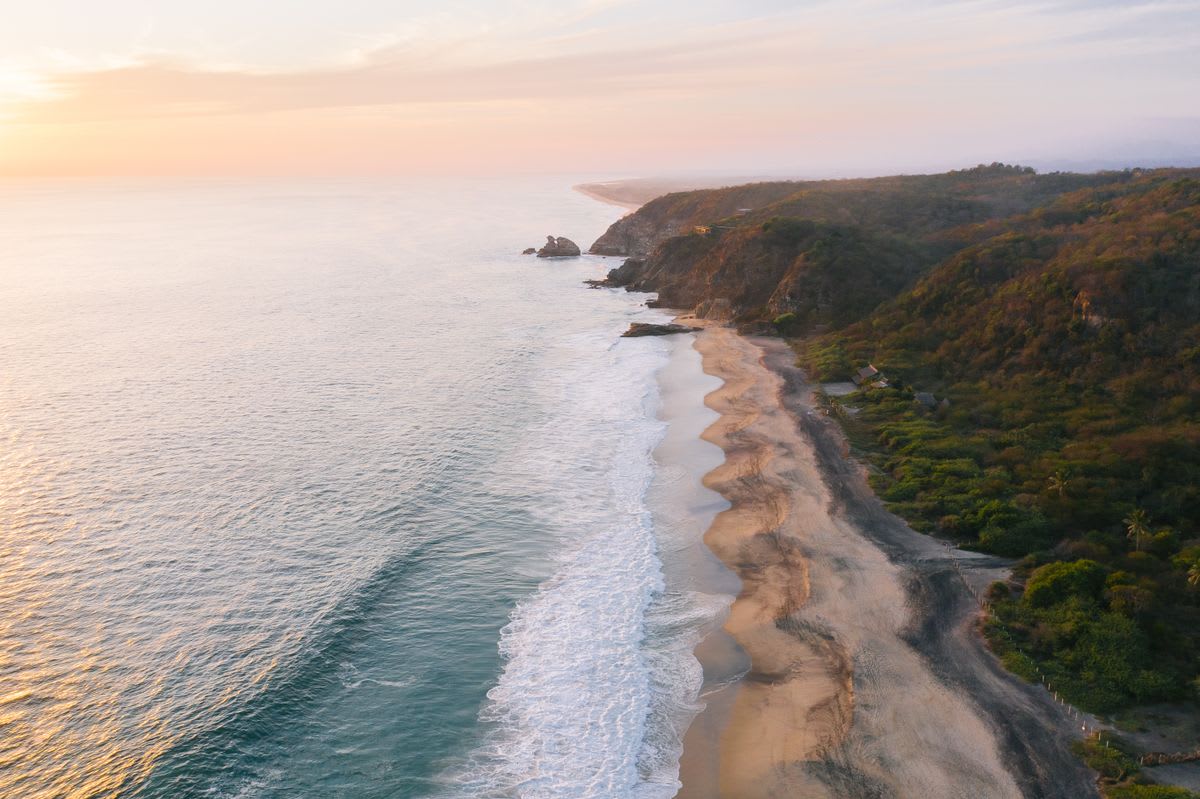
La Barra sits about 15 kilometers west of Puerto Escondido. It's lightly visited by tourists and has a north-facing exposure that makes it the most wind-favorable point in the local area during winter fronts. If there's kite wind at Puerto Escondido, La Barra is where you want to be.

Brisas de Zicatela
The beach zone north of Zicatela, before the swell becomes extreme, occasionally receives favorable northerly wind. It's an intermediate spot: more exposed than La Barra but with the complication of swell that can build quickly. For experienced wave kiters comfortable in shore-break conditions, it can be attractive when swell and wind align.
Playa Zicatela (advanced only)
Pure wave kiting. The same wave that made Puerto Escondido a global surfing destination — hollow barrels of 15–25 feet, violent currents, a sand bottom just inches below the surface. Strictly for high-level wave kiters with experience in heavy shore-break. Without knowing the spot, a support partner, and the right equipment, Zicatela is a dangerous place even for experienced riders.
Schools and Kite Lessons in the Region
There are no established kite schools with rental equipment in Puerto Escondido itself. The nearest certified school operating on this stretch of Oaxacan coast is Oaxakite, an IKO (International Kiteboarding Organization) school with multilingual instructors (Spanish, English, French) that works the full coastal strip between Puerto Escondido and Salina Cruz.

Oaxakite offers beginner courses, intermediate progression sessions, and advanced coaching. They also teach wing foil. To arrange lessons in the Puerto Escondido area, contact them in advance to coordinate dates, spot, and wind forecasts.
Important: There is no equipment rental in Puerto Escondido. If you're a kiter traveling here to ride, you must bring your own gear. This is a significant difference from destinations like Holbox or La Ventana where full-service kite shops are available.
What Level Do You Need?
Honesty matters here. Puerto Escondido is not a place to learn kitesurfing from scratch. The reasons:
- The ocean is powerful. Even on days without notable swell, currents at Puerto Escondido's beaches are stronger than lagoons or sheltered bays. Loss of kite control in the water can escalate quickly.
- Wind is intermittent. Learning kite requires consistent, predictable wind over several consecutive days. Puerto Escondido doesn't typically offer that.
- There's no kite rescue. At established kite destinations there are support boats and an organized community. Here you're largely on your own.

The ideal Puerto Escondido kiter profile is someone at intermediate to advanced level who already commands the equipment in the water, has experience in wave conditions, and is visiting the destination primarily for its other attractions — the world-class wave spectacle, the lagoons, the wildlife, Oaxacan food — and adds kite as a bonus activity when wind windows appear.

The Regional Alternative: La Ventosa and Salina Cruz
If kitesurfing is the primary reason for your Mexico trip — not a secondary activity — there's a destination about 200 kilometers from Puerto Escondido that changes everything: La Ventosa, near Salina Cruz, in the Isthmus of Tehuantepec.
La Ventosa appears on global rankings of the world's windiest spots. The Tehuano wind (a northerly that funnels through a gap between mountain ranges at the isthmus) blows with near-year-round regularity, except August through October. Speeds of 15–40 knots are routine. There are schools, shops, equipment rental, and an established kite community.
The smart combination for a two-week trip from North America or Europe: one week in Puerto Escondido (wave spectacle, lagoons, wildlife, food) + one week at La Ventosa (consistent kite wind). It's a three to four-hour drive along the coast, and the route passes through Huatulco if you want a stop. Our guide to combining Puerto Escondido and Huatulco covers that coastal corridor in detail.
How to Check Wind Before You Go
For planning a kite session at Puerto Escondido, the most useful tools are:
- Windfinder — Specific forecast for Puerto Escondido with speed, direction, and gust breakdowns. The most favorable direction for local spots is north or northeast wind.
- Windguru — The surf and kite classic. Shows GFS and ECMWF models for the area several days ahead.
- Surfline — Surf-focused but includes wind data that correlates well with kite conditions at Zicatela and La Barra.
You're looking for sustained northerly wind above 18 knots for at least two consecutive days. When that pattern shows up in a November or December forecast, it's worth building your visit around those dates. Our month-by-month guide to Puerto Escondido breaks down the full seasonal picture if you're planning further ahead.
Is It Worth It?
Yes — with the right expectations. If you're an advanced kiter who also values world-class wave watching, bioluminescent lagoons, sea turtle encounters, and some of the best coastal food in Mexico, Puerto Escondido has everything you want between sessions. The kite here isn't the reason to come — it's a spectacular bonus when wind shows up.

For the rest of the trip, our guide to Puerto Escondido beyond surfing covers the full range of what the destination offers. And if you're building an itinerary around a potential kite window, the 4-day Puerto Escondido itinerary is a good starting framework.
Practical Checklist for Kitesurfers Visiting Puerto Escondido
- Bring all your own gear. No rental available anywhere in town. Make sure travel insurance covers sports equipment.
- Contact Oaxakite in advance if you want an instructor. They're the IKO-certified school nearest to the area. Coordinate dates and wind forecast before booking.
- November–February is your best wind window. It also overlaps with the clearest water, whale watching season, and the least rain — the destination is at its best.
- La Barra de Colotepec is your first exploration stop. Drive out, check the wind, and use the lagoon side if conditions are building.
- Have a plan B (which here means plan A). Between bioluminescence tours, whale watching, and Chacahua Lagoon, windless days are never wasted days in Puerto Escondido.
auto_awesomeContinue exploring Puerto Escondido
You Might Also Like
 articleAventurascalendar_todayJan 20, 2026
Playa Zicatela: Your Complete Guide to the Mexican Pipeline
Stretching over three kilometers of golden sand and thunderous surf, Playa Zicatela is the beating heart of Puerto Escon
 articleAdventurescalendar_todayApr 23, 2026
Puerto Escondido Surf Conditions by Month: Swell, Wind & Crowds
Generic 'best time to visit' guides don't cut it for surfers. This one is purely for wave hunters: south swell timing, o
 articleAdventurescalendar_todayApr 20, 2026
La Punta vs Zicatela: Which Wave Is Right for Your Level?
Zicatela and La Punta are ten minutes apart on foot. The waves are completely different worlds. This guide is not about