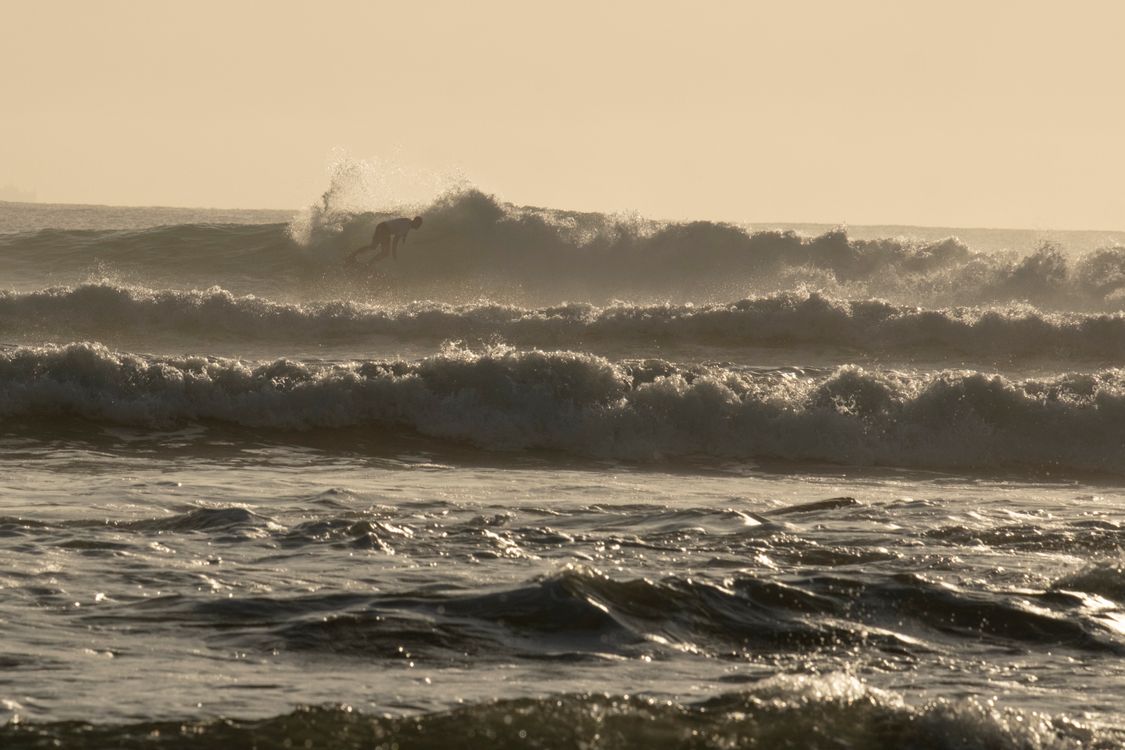
Puerto Escondido Surf Conditions by Month: Swell, Wind & Crowds
Search "best time to visit Puerto Escondido" and you'll find dozens of guides talking about weather averages, hotel prices, flight deals, and local festivals. What you won't easily find is what a surfer actually needs to know: when the swell arrives, what the wind does throughout the day, when the lineup is packed and when you can find relatively open water. This guide exists to fill that gap.
Puerto Escondido has one of the clearest surf profiles in the world: a dominant south swell from May through September that generates some of the most powerful beachbreak barrels on the planet, and a low season from December to February where the swell drops but conditions shift in favor of intermediate levels, beginners, and the most versatile spot in the area, La Punta. What falls in between — October–November and March–April — is where smart surfers find the perfect balance between quality and space in the water.

Quick Reference Table: Month by Month
This table summarizes key conditions for each month. Use it as a starting point; full details are in the sections below.
| Month | Wave Size (Zicatela) | Wind Quality | Crowds | Recommended Level |
|---|---|---|---|---|
| January | 3–6 ft (1–2 m) | Variable / good mornings | Low–Medium | Intermediate / Beginner (La Punta) |
| February | 3–6 ft (1–2 m) | Variable / good mornings | Low | Intermediate / Beginner (La Punta) |
| March | 5–10 ft (1.5–3 m) | Solid offshore 6–10am | Low–Medium | Intermediate–Advanced |
| April | 5–10 ft (1.5–3 m) | Solid offshore 6–10am | Medium | Intermediate–Advanced |
| May | 6–15 ft (2–5 m) | Offshore morning / onshore afternoon | Medium–High | Advanced |
| June | 10–20 ft (3–6 m) | Offshore morning / onshore afternoon | High | Expert |
| July | 10–20+ ft (3–6+ m) | Offshore morning / onshore afternoon | Very High | Expert |
| August | 10–20+ ft (3–6+ m) | Offshore morning / onshore afternoon | Very High | Expert |
| September | 6–15 ft (2–5 m) | Offshore morning / onshore afternoon | High–Medium | Advanced–Expert |
| October | 5–10 ft (1.5–3 m) | Solid offshore 6–10am | Medium–Low | Intermediate–Advanced |
| November | 5–8 ft (1.5–2.5 m) | Solid offshore 6–10am | Low–Medium | Intermediate–Advanced |
| December | 3–6 ft (1–2 m) | Variable / good mornings | Low (spikes at Christmas) | Intermediate / Beginner (La Punta) |
Peak Season: May–September — The Big South Swell


Everything revolves around the south swell. The low-pressure systems that form in the Southern Hemisphere during the austral winter — which coincides with the northern summer — travel thousands of kilometers across the Pacific and hit the southern Mexican coast with an energy that very few beaches in the world receive so directly. Zicatela, facing south, is perfectly exposed to catch them head-on.
May is the transition month: swells start arriving consistently, waves reach 6–12 feet on good days, and the summer crowds haven't yet built up. For many advanced surfers, May is Puerto Escondido's secret month — nearly the same quality as June but with 30–40% fewer bodies in the lineup.
June, July, and August are the most powerful months. Waves at Zicatela regularly reach 10–18 feet measured on the face (6–10 feet on the Hawaiian scale) and during the best swell cycles can exceed 20 feet. The barrels are hollow, fast, and enormously powerful — and the sand bottom is just inches below the surface, making wipeouts brutal. The "Mexican Pipeline" nickname isn't marketing: it's earned. For expert-level surfers with big-wave and sand-barrel experience, this is one of the most exciting destinations in the world. For everyone else, it's a place to watch from the beach and appreciate what you're seeing.
September marks the exit transition: swell remains significant but starts to ease, crowds thin noticeably from mid-month, and wind conditions improve in the mornings. If your schedule allows flexibility, the second half of September is one of the most underrated windows in the Puerto Escondido surf calendar.
WSL Competition Window
The Puerto Escondido Challenge — part of the WSL Big Wave Tour calendar — typically holds its waiting period between June and August, when the south swell is at its most consistent and powerful. Organizers activate the event when forecast buoys show 15+ foot waves for at least two consecutive days. If watching a competition is part of your plan, monitor the WSL calendar from late May onward.
Shoulder Seasons: October–November and March–April

These are the seasons that intermediate and advanced surfers should have circled on the calendar. The reasoning is straightforward: swell remains consistent and waves are still technical and fun, but the volume of people in the lineup drops noticeably. For someone flying in from Europe or North America on a limited surf trip budget who wants to maximize every session, these windows deliver more surf per capita than the peak summer months.
March and April still receive south swells from Southern Hemisphere storms, though spaced further apart than in summer. Waves at Zicatela sit between 5–10 feet on typical days, with bigger sets when an organized swell arrives. The morning offshore window is more reliable and longer-lasting than in the wet summer months. Water temperatures are warm and the overall atmosphere is noticeably more relaxed.
October and November are similar but with the added benefit that the rainy season atmosphere has cleared. Waves carry some residual energy from the south swell but the pattern normalizes. November in particular is considered by many local surfers to be one of the best months of the year: good surf, clear skies, perfect temperature, and beaches that have space to breathe after the summer rush.
Low Season: December–February — Beginners, La Punta and Whales
South swell arrives with much less frequency and power between December and February. Zicatela doesn't disappear — there are waves, and when a north or northwest swell arrives the beach can get interesting — but six-meter sets are the exception rather than the rule. This is La Punta's season.
La Punta is a rock point break at the southwest end of the bay that works as a gentle, consistent point break with long, relatively predictable waves. When Zicatela is too small or too shapeless for intermediate surfers, La Punta typically has perfectly-shaped 3–6 foot waves suited for practicing maneuvers, improving technique, and enjoying the water without excessive adrenaline. If you're thinking about taking surf lessons, December–February is the best time: more manageable conditions, more available instructors, and less competitive pressure in the water.
December through February is also prime humpback whale watching season in the area — a considerable bonus for the no-surf days. Skies are clear, nights are cool, and the town has a quiet energy that those avoiding the summer rush genuinely appreciate.

The Daily Timing Window: Why Mornings Are Sacred

Regardless of which month you choose, there is one constant in Puerto Escondido that every surfer needs to internalize: mornings are everything. The daily wind pattern is nearly universal throughout the entire swell season:
- 6:00–10:00 am: Light or no offshore wind (blowing from land to sea). Waves have clean faces, defined lips, and are readable and predictable. This is the session of the day.
- 10:00–12:00 noon: Wind starts shifting. Some days the offshore holds until 11am, other days the onshore creeps in before 10. Depends on season and local pressure.
- Noon onward: Onshore wind (blowing from sea to land) chops up the wave face and turns the peak into an unreadable mess. The swell is still arriving — but wave quality drops sharply.
The practical advice is simple: get in the water at sunrise or shortly after. The first two hours are gold, especially in July and August when swells are largest and the offshore allows you to surf barrels that would be unsurfable by afternoon. For non-morning people, Puerto Escondido can be genuinely frustrating in summer — afternoon sessions at the peak are a struggle.
During shoulder months (March–April, October–November), the offshore tends to last a bit longer — until 10:30 or 11am on the best days. In winter (December–February), wind is more variable overall and there are afternoons with decent conditions, especially at La Punta, which is more sheltered from the onshore.
La Punta vs. Zicatela: Do Seasonal Differences Matter?
Yes, significantly. The two spots aren't simply difficulty alternatives — they have distinct seasonal profiles that make the best choice shift by month. Our La Punta vs. Zicatela article covers this in depth, but the seasonal summary looks like this:
- May–September: Zicatela is at its best but strictly for advanced and expert surfers. La Punta in these months also picks up south swell and can be fun for intermediates, though with more power than in winter. Intermediate surfers with some bigger-wave experience can enjoy La Punta even during maximum swell months.
- October–November and March–April: Both spots work well. Zicatela is accessible for advanced surfers with technical but manageable waves. La Punta is ideal for intermediates looking to improve. The mix of skill levels in the water is the most balanced of the year.
- December–February: La Punta is the main event. Consistent 3–6 foot waves with good shape, appropriate for beginners with some base and for intermediates wanting long, relaxed sessions. Zicatela can be flat or shapeless these months unless a north swell arrives.

Rain and Its Effect on Surfing
Puerto Escondido's rainy season coincides almost exactly with the south swell season: June through September. This raises a logical question: does rain affect the surf? The short answer is almost nothing.
Tropical rain in Puerto Escondido follows a very defined pattern: it falls mostly at night and in brief afternoon or late-morning storms. The morning surf window — 6–10am — is typically clear even during the peak rainy period. Days with continuous morning rain are the exception, not the norm.
What can occasionally affect things is fresh water runoff from rivers after heavy rain, which can temporarily alter water quality near some river mouths. At Zicatela this is rarely a problem given the beach's distance from major waterways. At La Punta it's also not significant.
The most visible effect of the rainy season is environmental: the hills surrounding Puerto Escondido turn intensely green, the air smells different, and there's a humid energy in the atmosphere that many surfers who visit in summer remember as part of the experience. It's not a problem — it's part of the character of the place.
Crowds: The Variable That Hurts Most

Crowds at Zicatela in summer are real and need to be managed with honesty. During July and August, the main peak at Zicatela can have between 30 and 60 surfers in the water simultaneously when conditions are good. Some are locals and regular visitors who understand wave priority; many others are passing travelers who don't necessarily have the same awareness of lineup hierarchy.
The strategies that work:
- Get in at dawn. At 6am even in July there are fewer than ten people in the water. The lineup fills progressively — by 8:30 it can be complicated, by 9:30 on good days it's chaotic.
- Choose May or September. The waves are virtually identical but with a fraction of the people. May in particular is the most underrated month in the surf calendar.
- Go during shoulder season. October–November or March–April are the times of year when you can surf Zicatela with reasonable space and quality waves.
- Use La Punta as a tactical alternative. When the Zicatela peak is impossible, La Punta almost always has relatively more space.

Practical Planning: When to Book and What to Expect
For accommodation during June–August, book at least 2–3 months in advance. The hostels and houses close to Zicatela that are known within the surf community fill up fast. Beachfront options go first. Our guide to the best accommodation for surfers in Puerto Escondido covers the best-positioned options for every budget.
For shoulder months (March–April, October–November), less lead time is needed — two to four weeks is usually sufficient for most options. In low season (December–February) you can arrive with less advance planning, though December has Christmas tourism spikes worth anticipating.
If your goal is to surf the Mexican Pipeline in serious conditions, the optimal months are June–August with early morning entry. If you're intermediate and want to maximize time in the water with quality waves, May, September or October are your months. If it's your first visit and you're still developing your level, February–March gives you the most forgiving combination of conditions to grow as a surfer.
The complete month-by-month guide to Puerto Escondido expands the general context of the destination beyond surf if you want to integrate wave planning with the rest of your trip.
Summary: The Right Month for Your Goal
- I want the biggest, most powerful waves: June–August. Get to the peak early.
- I want quality without the chaos: May or September. Puerto Escondido's secret months.
- I'm intermediate and want to push my Zicatela level: March–April or October–November.
- I'm a beginner or want to learn: December–February, La Punta, surf lessons.
- I want to watch a WSL competition: Monitor the Big Wave Tour calendar between June and August.
- I want to combine surf with nature and a relaxed vibe: November is hard to beat.
auto_awesomeContinue exploring Puerto Escondido
You Might Also Like
 articleAventurascalendar_todayJan 20, 2026
Playa Zicatela: Your Complete Guide to the Mexican Pipeline
Stretching over three kilometers of golden sand and thunderous surf, Playa Zicatela is the beating heart of Puerto Escon
 articleAdventurescalendar_todayApr 20, 2026
La Punta vs Zicatela: Which Wave Is Right for Your Level?
Zicatela and La Punta are ten minutes apart on foot. The waves are completely different worlds. This guide is not about
 articleAdventurescalendar_todayApr 17, 2026
Kitesurfing & Kiteboarding in Puerto Escondido: Conditions, Spots & Lessons
Puerto Escondido isn't the easiest kitesurfing destination in Mexico — and that's precisely what makes it interesting fo