
4 Days in Puerto Escondido: A Chapter-by-Chapter Itinerary for Travelers Who Want More
Four days is the number. Not three, which leaves you feeling like you barely scratched the surface. Not seven, which requires an organizational commitment most people don't have. Four well-used days are enough to watch a sunrise over the Pacific, swim in a lagoon that glows at night, release a sea turtle at sunset and eat black mole in a market where nobody speaks English. Enough, too, for the place to convince you to come back.
This guide is organized the way a trip should be: not as a list of places to check off, but as four chapters of a story that makes sense to read in order.

Before You Start: Three Decisions That Define the Trip
Some things are worth sorting before you arrive so you don’t lose hours of the first day.
Where to stay?
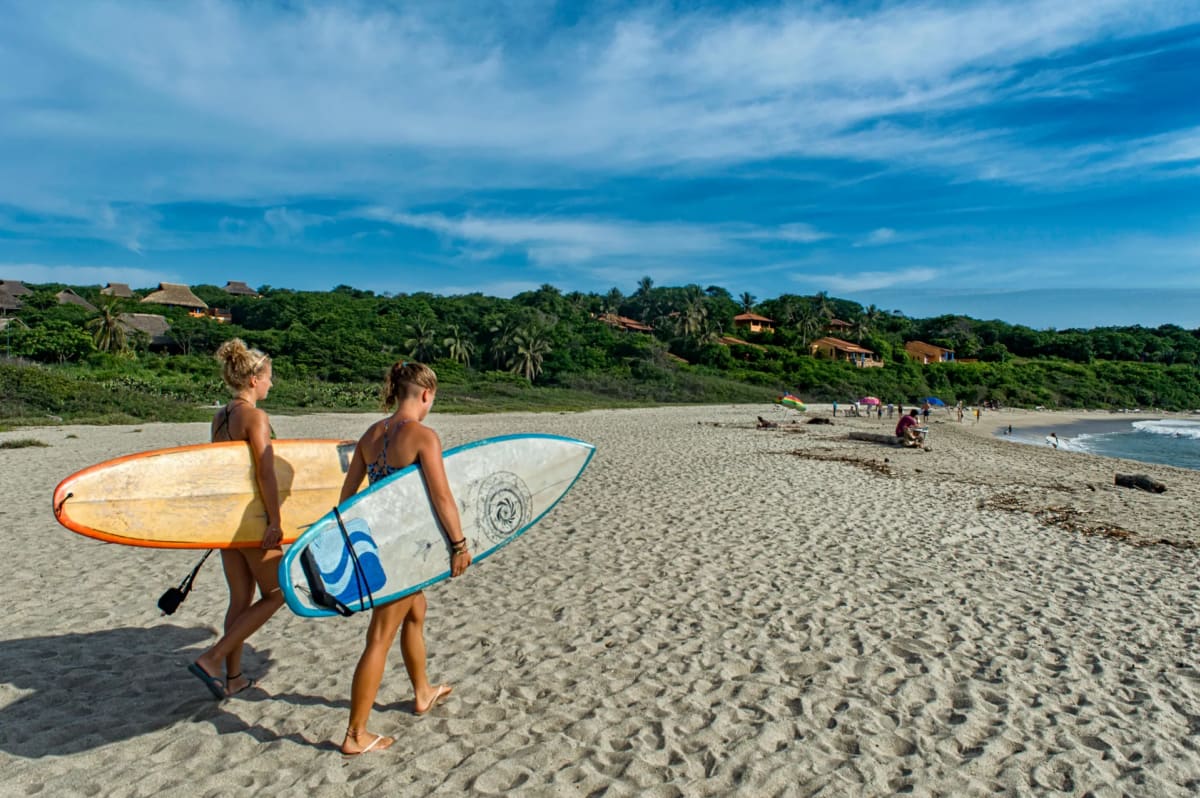
Your neighborhood choice sets the tone for the whole trip. Zicatela is for those who want action, nightlife and surf. La Punta is for people who want a relaxed vibe, palapa restaurants and a plant-based breakfast. Carrizalillo is for families and couples who prioritize quiet and easy access to safe swimming. El Centro is for travelers who want local prices and real local life. There’s no right answer — only yours. Browse accommodation options in Puerto Escondido to find what suits your style.
What to book before arriving?
Tours with limited capacity sell out fast in high season: bioluminescence, sea turtle releases and whale watching (December–March) go days in advance. Most other activities can be organized with 24 hours’ notice. But if you’re traveling in December, January, February, March or Easter Week, book everything from home.
How to get around?
The blue vans (colectivos) connect all the tourist areas along the coastal highway for less than a dollar. Taxis are fast but negotiate the price before getting in — there are no meters. For excursions outside town, organized tours are almost always more convenient and economical than renting a car or scooter.
Chapter 1: Day One — Reading the Place Before Acting
Day 1 isn’t for doing things. It’s for understanding where you are.
Early Morning: The Puerto Escondido That Works Before Dawn
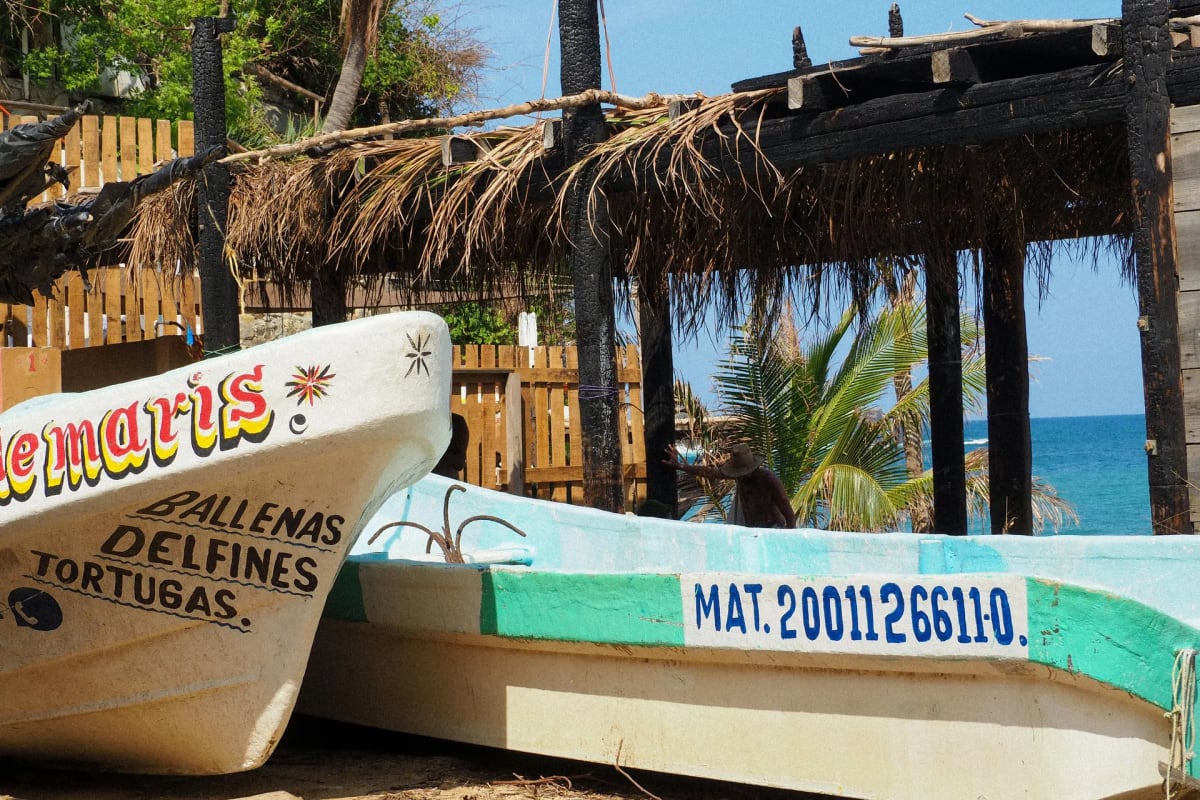
If you arrive the night before (the ideal), set your alarm an hour before sunrise and go to the fishing port. The artisanal fishing boats return between six and eight in the morning. Watching them unload the catch, seeing how prices are negotiated at the dock and how the local market absorbs the day’s haul is a cultural immersion that doesn’t appear in any tour. It’s free, it’s authentic, and it leaves you hungry.
Morning: Carrizalillo and the First Contact with the Pacific
After the port, go to Carrizalillo. Descend the 175 steps, leave your bag and get in the water. This is the safest swimming beach in all of Puerto Escondido — semi-enclosed, with gentle waves and a sandy-rocky bottom. If you’ve never swum in the Mexican Pacific, this is where you understand why people talk about this ocean differently from the Atlantic.
The rocky bottom makes snorkeling interesting even without a guide: parrotfish, sea stars and in the better months, hawksbill turtles grazing on the algae. If you want to reach the richest reefs, away from shore, save the Pacific reef snorkeling tour for Chapter 3.
Afternoon: Zicatela — Watch, Don’t Touch
Walk to the northern end of the beach, sit on any terrace with a sea view and watch Zicatela for an hour. The Mexican Pipeline, when it’s on, is a spectacle that very few people in the world have seen live. The scale of the waves, the speed of the surfers and the indifference with which the ocean manages all of it — seen from outside — is one of the hardest images from this destination to forget.
If you want to learn to surf, don’t do it here: go to La Punta or Carrizalillo. Beginner surf lessons are designed for waves that don’t break you in two.

Evening: El Adoquín and the First Local Dinner

At sunset the historic center closes to traffic and becomes a pedestrian promenade. Craftspeople, musicians, food stalls and entire families make El Adoquín the most honest cultural thermometer in the city. Have dinner here — not on El Adoquín itself, but on one of the parallel streets where prices are local and the tlayuda arrives the size of a pizza plate.

Chapter 2: The Lagoon Day — Manialtepec from Dawn to Midnight
The second chapter of the trip unfolds almost entirely outside Puerto Escondido, fourteen kilometers north. Manialtepec Lagoon is a completely different ecosystem from the ocean — and for many, the most powerful memory of the whole trip. It has two faces: one by day and one by night. On Day 2, you experience both.
Dawn: The Birds That Don’t Wait
Leave before daybreak. The birdlife at Manialtepec is at its most active in the first hour of light: over 280 species recorded, with tricolored herons, roseate spoonbills, wood ibis and yellow-naped parrots visible from the boats. Local guides know exactly where to position you for each species.
Book the dawn birdwatching tour — this activity has limited capacity and the best moments disappear in the first twenty minutes of light.
Morning: Kayaking Through Mangrove Tunnels
After the birds, kayaking. The lagoon has a network of interior channels that can only be explored by kayak or canoe — too narrow and shallow for any motorized vessel. Inside those tunnels of aerial roots live one-meter iguanas, short-nosed crocodiles and a quiet that makes it hard to maintain paddling rhythm.
Book the mangrove kayak tour — suitable for all fitness levels, no prior experience needed.
Between the bird tour and the kayak you’ll have spent the entire morning on the lagoon. Return to town for lunch — the central market is the most honest option in terms of price and flavor — and save the rest of the afternoon for exploring La Punta at your own pace.
Night: The Lagoon That Glows
Return to Manialtepec after dark. The lagoon hosts one of the most significant concentrations of bioluminescent dinoflagellates in Mexico. When you disturb the water with your hands in complete darkness, each movement produces blue-green flashes that last a second but take much longer to process. Swimming here at night is one of the experiences most difficult to describe in words and easiest to remember for the rest of your life.
Intensity varies with the lunar cycle: new moon nights are the most spectacular. Ask the operator when the next one falls.
Book the Manialtepec nighttime bioluminescence tour — includes transport from town, specialist guide and all necessary equipment.
Chapter 3: The Open Ocean Day — What Happens Far from Shore
The third chapter belongs to the ocean. Not the beach — the actual ocean, the one that starts where the waves end and doesn’t stop until Japan. Day 3 is for moving away from the coast to see it properly.
Morning: Dolphins and, If It’s the Season, Whales
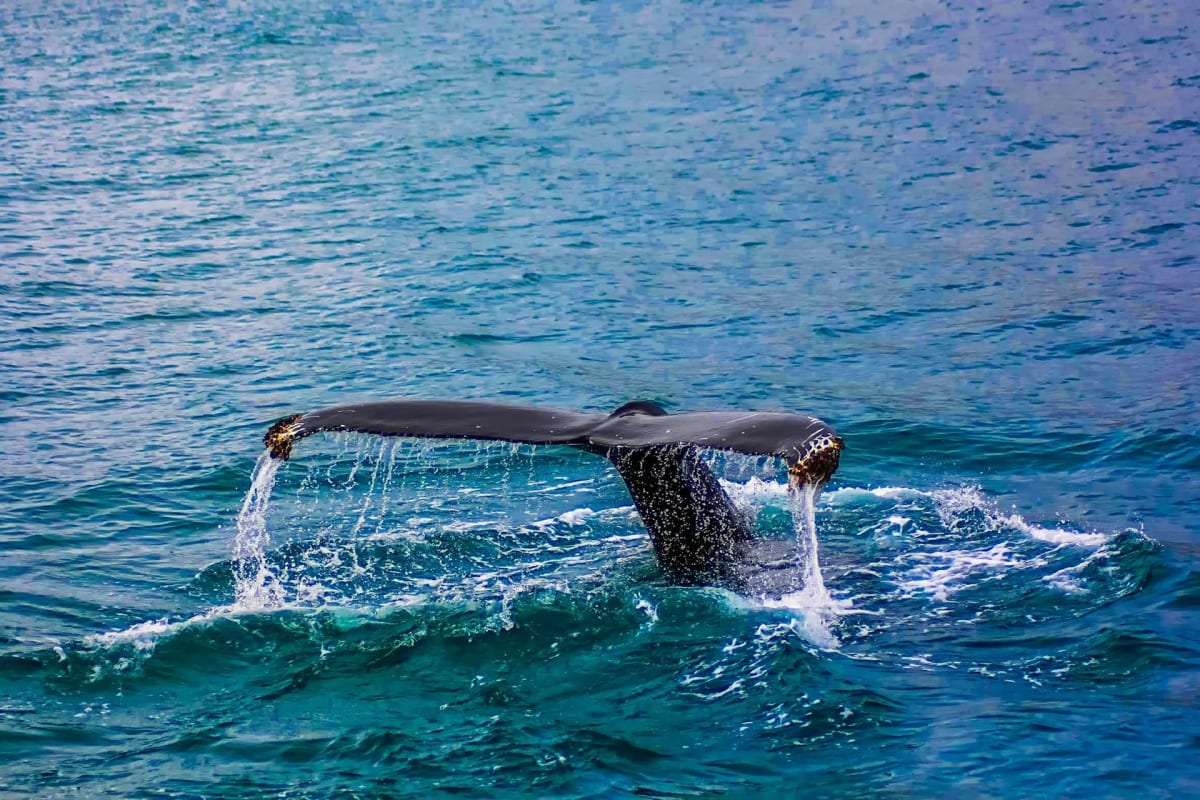
Morning boat departures have the highest probability of sightings. The spinner dolphin pods that frequent these waters can number several hundred individuals — the kind of encounter where the animal comes toward you, not the other way around. Between December and March, the same routes include a real possibility of seeing humpback whales, which pass the Oaxacan coast on their breeding migration.
Book the dolphin watching tour — morning departures are the most productive.
If you’re traveling December through March and want to dedicate the whole morning specifically to cetaceans, the specialized humpback whale tour targets specific points on the migration corridor where sighting probability is highest.
Midday: Reef Snorkeling
After the boat tour, snorkeling. The rocky reefs at Carrizalillo and the bays of Angelito and Manzanillo hold parrotfish, hawksbill turtles and sea stars visible even from shore. To reach the sites with the greatest marine life density, well away from swimmers, the Pacific reef snorkeling tour pairs well with the morning dolphin outing.
Sunset: On Horseback to the Beach
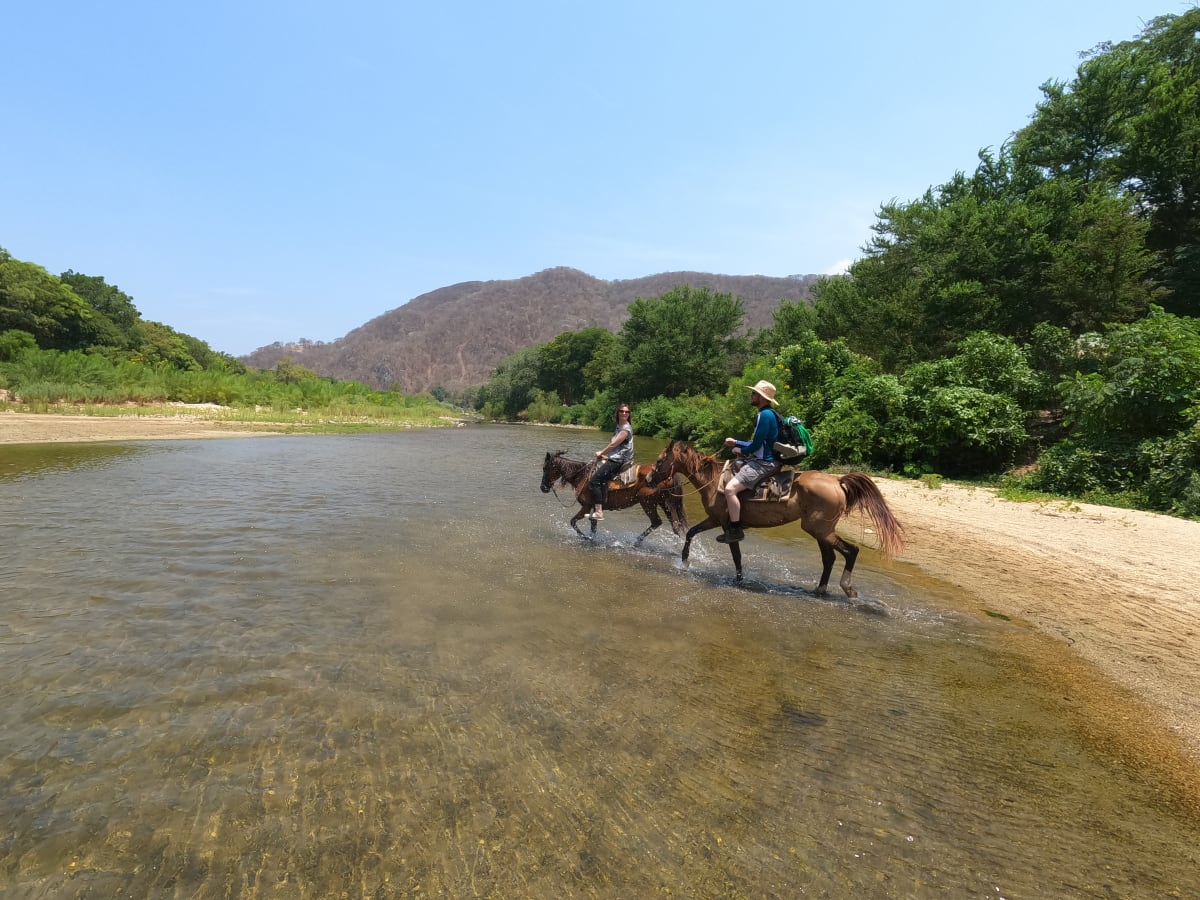
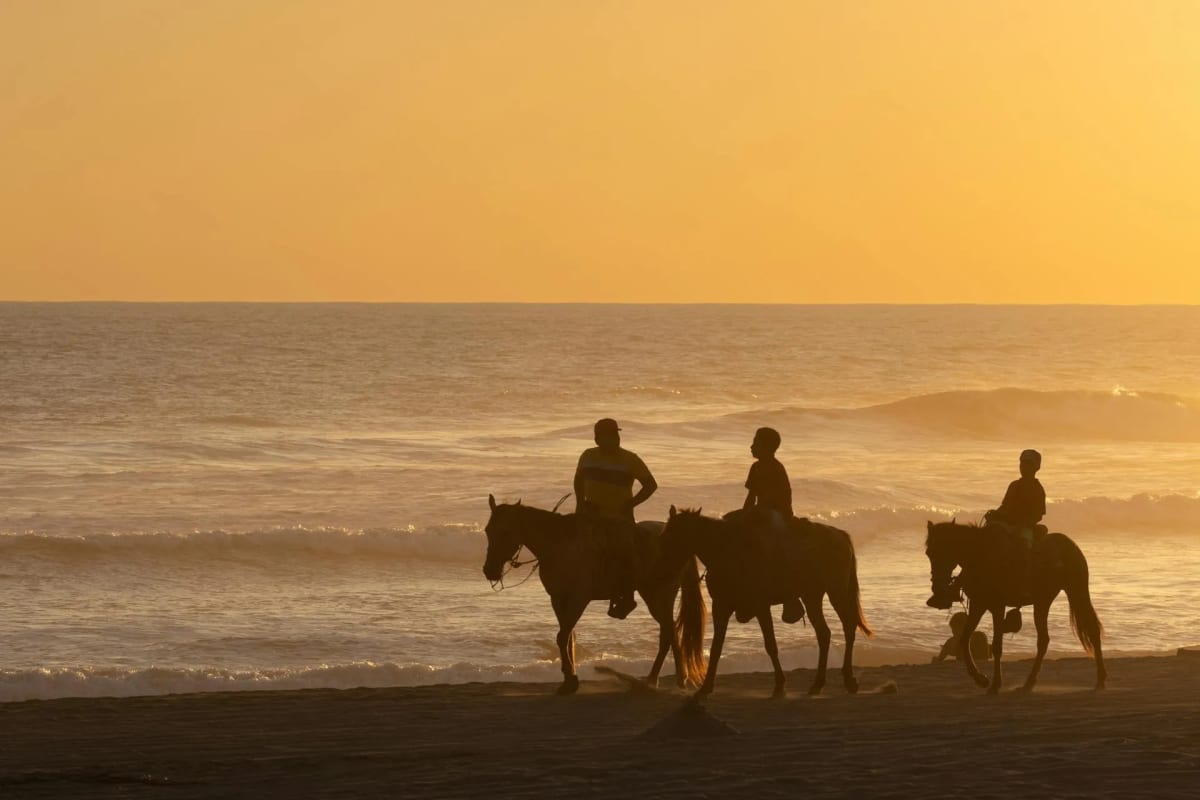
There’s a horseback route that crosses a freshwater river to arrive at the beach exactly when the light turns orange. No prior riding experience needed. No further explanation required — it’s the kind of experience that justifies itself.
Book the sunset horseback ride — small groups so the moment doesn’t become a parade.

Night: Sea Turtle Release
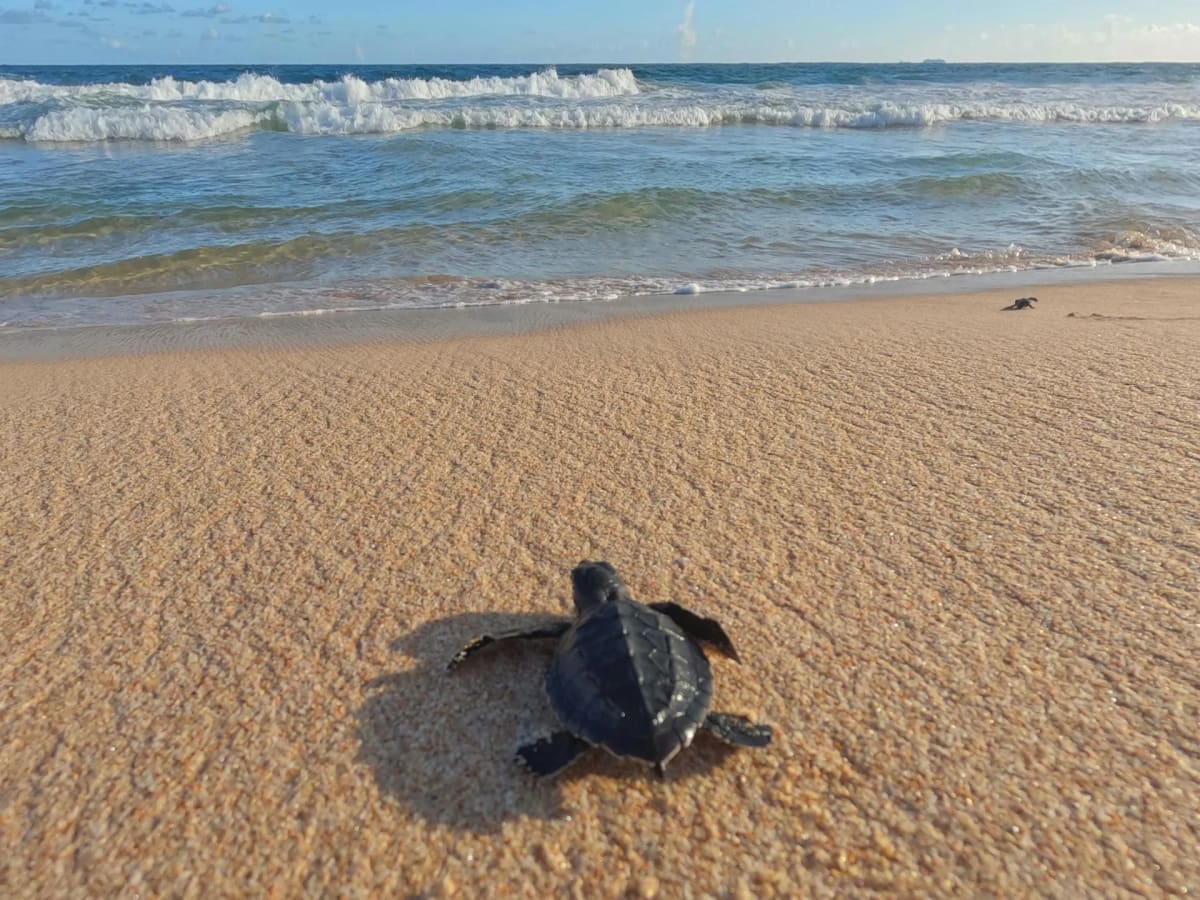
If bioluminescence was the night of Chapter 2, this is the night of the turtles. Puerto Escondido is one of the most important olive ridley sea turtle sanctuaries in the Eastern Pacific. The local protocol: go to the beach with a small group, receive an explanation of the conservation cycle, place a hatchling at the water’s edge and watch it find the ocean alone. The ten seconds it takes are recorded in a way that photographs cannot reproduce.
Book the sea turtle release tour — available most of the year, with greatest activity August through December.
Chapter 4: The Escape Day — Leaving the Radius to Understand the Context
The fourth chapter takes the trip out of Puerto Escondido to put it in perspective. On Day 4, the Oaxacan coast reveals ecosystems and villages that contrast sharply with the city — and that change the way you understand what you’ve seen in the three previous days. Choose one of these two options based on your mood.
Option A: Chacahua — The Ecosystem That Defends Itself
Sixty kilometers to the west, Chacahua National Park is a parallel universe to Puerto Escondido. An island accessible only by boat, separated from the mainland by a turquoise lagoon. Inside: thirty-meter mangroves, a community-managed free-access crocodile sanctuary, fishing palapas where the day’s menu is decided by what the sea brought that morning, and a beach of dark sand with no resort umbrellas or plastic cups. Coastal lagoon ecosystem in near-pristine state — exactly the opposite of what you imagine when you picture tourist Oaxaca.
Book the Chacahua National Park excursion — includes transport, mangrove boat tour and free time on the island. You can also explore multi-day packages that combine this excursion with other highlights.


Option B: Mazunte, Zipolite and Punta Cometa — The Coast With Its Own Personality
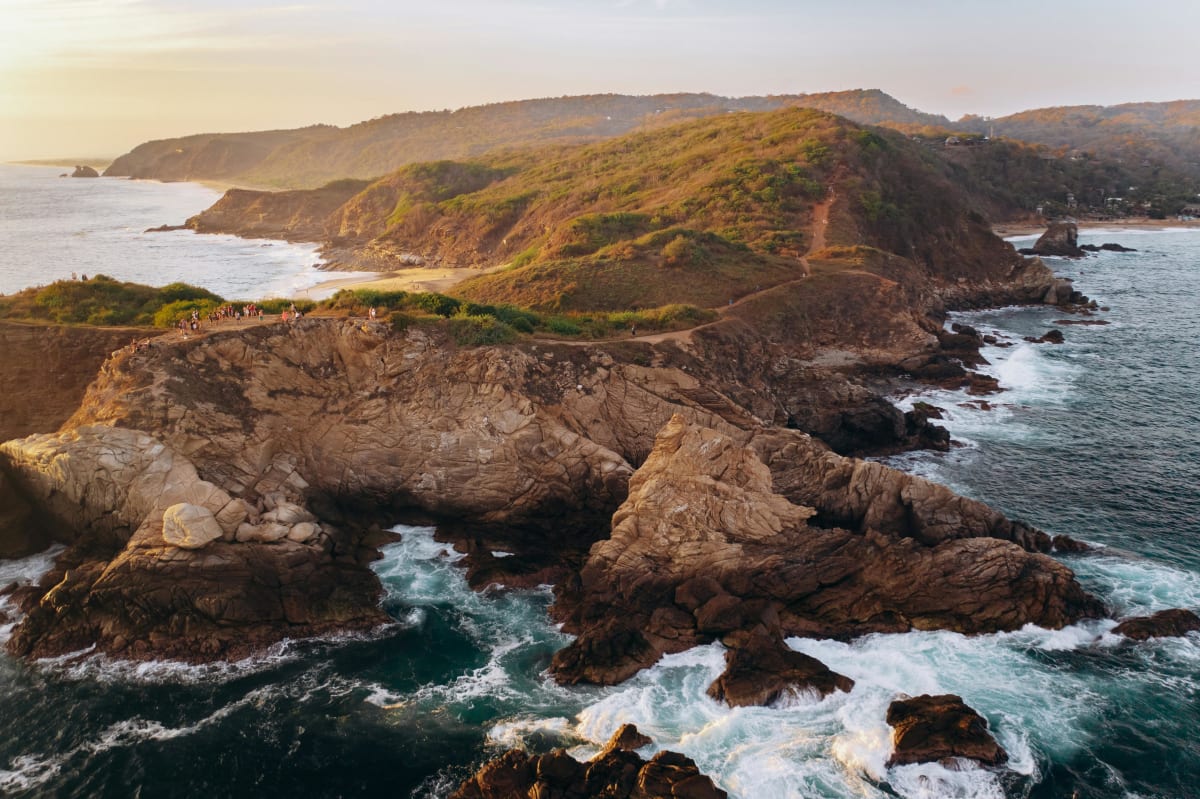
Ninety kilometers to the east, the Mazunte–Zipolite–Punta Cometa triangle packs more unique experiences per kilometer than almost any other stretch of coast in Mexico. Punta Cometa is the southernmost point of continental North America, and the viewpoint it offers over the Pacific resembles no other on the continent. Zipolite is the country’s only officially recognized nudist beach. Mazunte is home to Oaxaca’s most famous artisan cosmetics cooperative — and a hawksbill turtle conservation workshop that has been working for decades without appearing on any “must-do” list.
Book the Mazunte–Zipolite–Punta Cometa tour — includes snorkeling, bilingual local guide and free time in each village.
If You Have One More Day: Four Experiences That Don’t Fit in Four Days
The four chapters above cover the essentials. But if you can extend the trip by one day, these are the private experiences that repeat visitors include on the second trip — and regret not having done on the first.
The Ancestral Mezcal Route
The sierra near Puerto Escondido has palenques producing mezcal using pre-industrial methods: maguey roasted in an earth pit, ground on a stone tahona, fermented in wooden vats and distilled in clay pot stills. A guided visit to one of these distilleries is a way of understanding Oaxaca that no restaurant or bar can replicate.
Book the ancestral mezcal palenque tour — includes full process and agave varietal tasting.
Horseback Ride to Thermal Springs
A different horseback route from the sunset one: this climbs into the humid sierra and ends at natural thermal pools among volcanic rocks. Jungle, river, mountain and hot water — exactly the opposite of what you expect from a coastal destination.
Book the horseback ride to thermal springs — ideal for anyone who wants a day completely different from the beach-toned rest of the trip.
Skydiving over the Pacific
Forty seconds of freefall over the ocean, with the entire Oaxacan coastline visible from end to end. No prior experience needed. The description says most of it — what’s missing doesn’t fit in text.
What Gets Left Out of Every Itinerary

No itinerary can plan the best things that are going to happen to you in Puerto Escondido. The conversation with the fisherman who has been going out before dawn for forty years and talks about the tides like neighbors. The nameless restaurant that appears around a corner with a tlayuda that tastes exactly like it should. The unexpected hour when the sea goes flat and Zicatela becomes a mirror. Those things can’t be booked — they only happen if you leave space for them.
For deeper context on each specific activity, read our complete guide to activities, wildlife and flavors of the Oaxacan coast.

Frequently Asked Questions About the 4-Day Trip
When is the best time for this 4-day itinerary?
The itinerary works year-round, but the dry season (November–April) offers the most predictable weather. For humpback whales in Chapter 3, the trip must fall between December and March. For maximum bioluminescence intensity, look for new moon nights between October and February.
Can this itinerary be done with children?
Yes, with minor adjustments. Carrizalillo is the best beach for children. Sea turtle releases work very well for families — educational and emotionally powerful for all ages. Mangrove kayaking is suitable from age six or seven. Bioluminescence may be too late for very young children; in that case swap the order and make the dawn birdwatching tour a special early-morning experience instead.
How much money do I need for 4 days in Puerto Escondido?
Depending on your travel style. In the mid-range — modest hostel or hotel, eating at markets and local restaurants, organized tours — a budget of 80–120 USD per person per day covers accommodation, meals and the main activities. Wildlife tours and day trips represent the largest expense — compare prices between operators but don’t choose on price alone: the quality of the guide makes an enormous difference to the experience. Check available stays to plan your accommodation budget.
Do I need to rent a car?
For getting around Puerto Escondido itself, no. The colectivos and taxis cover all tourist zones at low cost. For Chacahua and Mazunte, tours include transport — which is more comfortable and economical than going independently, especially if you don’t know the coastal highway at night. If you do prefer independence, see our car and scooter rental guide.
Can I do Chapter 2 and Chapter 3 on the same day?
We don’t recommend it. Manialtepec from dawn to midnight — birds, kayak, bioluminescence — is already a full and demanding day. Trying to add dolphins or turtles means neither experience gets the attention it deserves. The best travel memories aren’t accumulated — they’re deepened.
auto_awesomeContinue exploring Puerto Escondido
You Might Also Like
 articleAdventurescalendar_todayNov 26, 2025
Puerto Escondido First-Timer’s Guide: Plan Your Perfect Trip
Welcome to Puerto Escondido, where rugged Pacific waves meet pristine jungle lagoons and Oaxacan culture thrives along o
 calendar_todayJul 18, 2026
Oaxacan Artisan Shopping: What to Buy Near Puerto Escondido
Alebrijes, black pottery, hand-woven rugs, and chocolate — what to buy, where to find it near Puerto Escondido, and how
 articleAdventurescalendar_todayMar 10, 2026
Puerto Escondido Expat Guide: Everything You Need to Know About Living Long-Term
Puerto Escondido has quietly transformed from a surfers’ secret into one of Mexico’s most compelling long-term destinati