
Spearfishing in Puerto Escondido: Regulations, Spots & What to Catch
Spearfishing in Puerto Escondido: Regulations, Spots & What to Catch

Spearfishing in Puerto Escondido is one of the Oaxacan coast’s best-kept secrets. While the surf crowd fills Playa Zicatela and the yoga crowd claims Carrizalillo, local fishermen quietly know something most visitors never discover: the rocky reefs just offshore hold huachinango, cabrilla, dorado, and pargo in numbers that would make any spearfisher forget their flight home. This is a guide for the people who came here to dive, not just swim.
The Rules: What Mexican Law Says About Spearfishing
Before you rig a speargun, understand the legal framework. Mexico’s fishing regulations are enforced by CONAPESCA (Comisión Nacional de Acuacultura y Pesca), and ignorance won’t help when a marine inspector boards your panga. Full current regulations are published on the official CONAPESCA portal.
Get Your CONAPESCA License First
A Mexican sport fishing license is mandatory for anyone over 14 fishing recreationally in Mexican waters — spearfishing included. Licenses are purchased online through CONAPESCA’s portal. Costs run roughly $12 USD for one week up to $46 USD for a full year. Carry a printed or digital copy every time you enter the water with a spear.
Freediving Only — Scuba Spearfishing Is Illegal
The rule most visiting spearfishers violate unknowingly: spearfishing with scuba gear is prohibited throughout Mexico. Freediving only. The conservation logic is sound — the depth and range advantage of scuba would decimate reef fish populations within seasons. If you’re not yet a freediver, Puerto Escondido’s calm inner reefs are an ideal place to start.
Catch Limits and Protected Species
The general rule is no more than 10 fish per day in saltwater, with no more than 5 of any single species. Sea turtles, whale sharks, mantas, and dolphins are completely off-limits. Reef sharks are protected in most Mexican waters. Roosterfish (pez gallo) can legally be taken, though most experienced spearfishers practice catch-and-release — poor table quality and real conservation value make it an easy call.
No-Take Zones Near Puerto Escondido
The most significant protected area in the region is Parque Nacional Huatulco, approximately 110 km east along the coast — a complete no-take zone. Confirm zone boundaries before entering any protected area. Locally, the estuary at Manialtepec Lagoon and the mouth of the Río Colotepec are crocodile habitat and off-limits regardless of fishing regulations.

Best Spearfishing Spots Around Puerto Escondido
Playa Manzanillo Reef
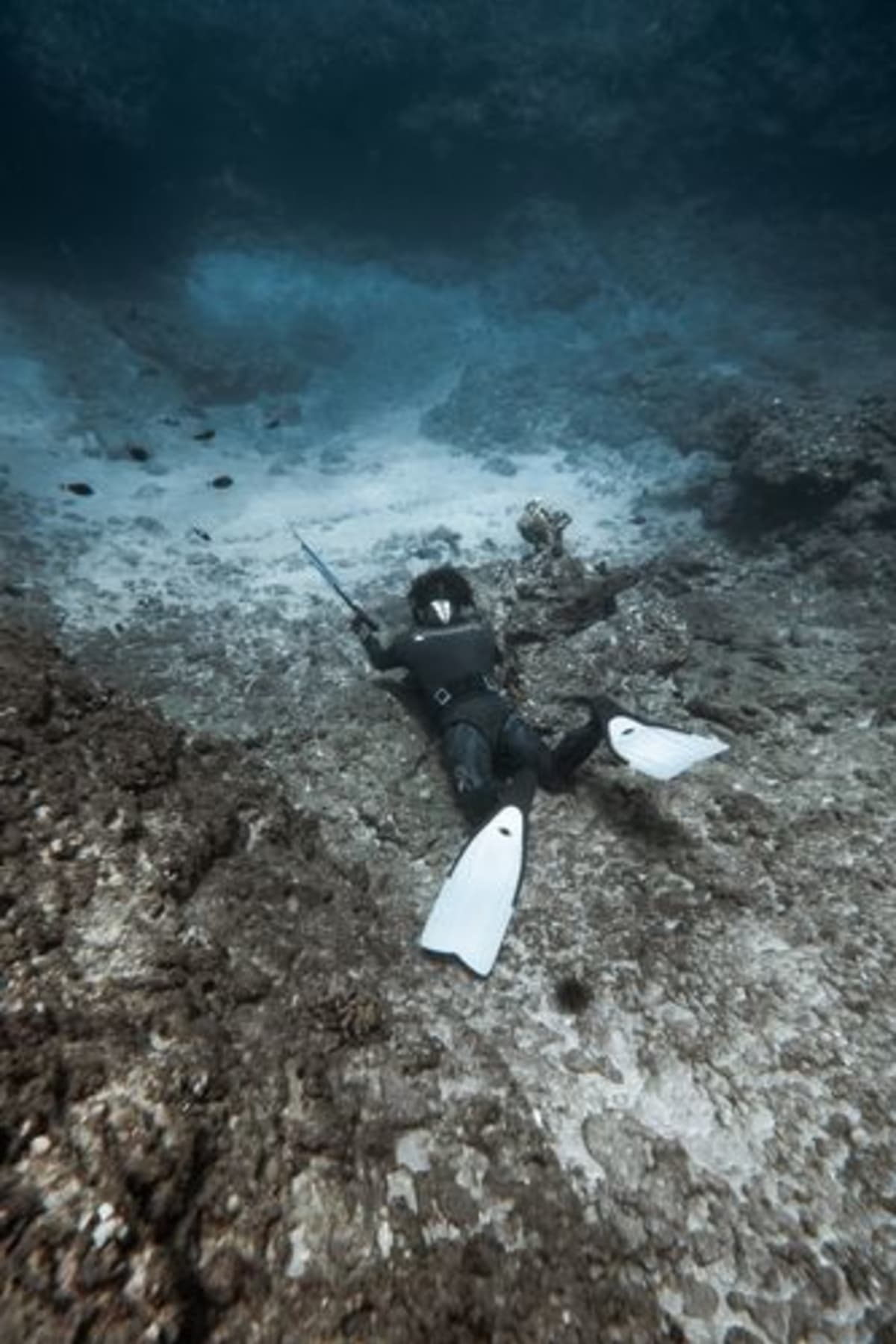
Playa Manzanillo is the local snorkeling secret, but the rocky reef extending from its eastern headland consistently holds huachinango (red snapper), señorita fish, and triggerfish. Entry is technical over slippery rocks at low tide; visibility averages 8–15 meters. Best window: 6–9 AM before the tour boats arrive. Depth range: 3–12 meters. For more ways to explore the ocean from this stretch of coast, browse our adventures guide.
Punta Zicatela
The rocky southern point at the end of Playa Zicatela creates underwater structure that attracts cabrilla (grouper) and large jacks. Currents run strong here — not a beginner entry point. Hire a panguero to position you correctly and pick you up after a drift dive. Surge is dangerous during swell season (June–November).
Offshore Pinnacles: Hire a Panga
The serious fish — dorado, wahoo, pargo, and roosterfish — live on underwater pinnacles and seamounts 3–10 km offshore. Local pangueros know these spots by GPS and memory, handed down through generations. A half-day panga runs $150–$250 USD and opens up structure no solo diver finds. Ask at the cooperativa de pescadores at Bahía Principal; boats return with catch at 7–8 AM daily.
Manialtepec Lagoon Mouth
The outer coast near the Manialtepec lagoon entrance holds robalo (snook) in the surf zone at dawn and dusk, particularly August through October. This is ambush hunting in shallow, fast water with limited visibility. Experienced hunters who read the tidal rhythms do well here. Stay well clear of the lagoon itself — active crocodile territory.
What to Catch: Puerto Escondido Species by Season
Realistic targets for a freediving spearfisher in Puerto Escondido waters:
| Species | Nombre local | Best Season | Depth | Notes |
|---|---|---|---|---|
| Red Snapper | Huachinango | Year-round | 8–25 m | Most common reef target |
| Leopard Grouper | Cabrilla | Year-round | 10–30 m | Rocky structure & caves |
| Mahi-Mahi | Dorado | Jun–Oct | Offshore | Blue-water pelagic |
| Roosterfish | Pez Gallo | Apr–Oct | Nearshore | C&R recommended |
| Jack Crevalle | Jurel | Year-round | 5–20 m | Fast, schooling |
| Wahoo | Guahu | Jul–Nov | Offshore | Excellent eating |
| Spanish Mackerel | Sierra | Year-round | Surface–15 m | Reef edges |
| Common Snook | Robalo | Aug–Oct | 1–5 m | Lagoon mouths |
Winter (December–April) delivers the cleanest visibility and most stable conditions. Summer and fall bring warmer water and better pelagic action offshore, with reduced near-shore visibility from river runoff.

Gear, Technique & Finding a Local Guide
- Speargun: For reef targets at 5–15 m, a 90–110 cm band-powered rail gun or 60–80 cm pneumatic works well. Offshore or at depth, go longer (120–130 cm).
- Wetsuit: A 3 mm full suit is comfortable year-round. Bring a 5 mm for extended winter dives (December–March, surface ~24°C).
- Safety gear: Dive float and flag, surface marker buoy, dive knife, and a buddy. Never dive alone.
- Dive reel: Strongly recommended for offshore drift dives where you cannot ascend back to your entry point.
Finding a local guide: The best spearfishing guides in Puerto Escondido don’t advertise on booking platforms. Ask at the cooperativa de pescadores on Bahía Principal when boats come in at 7–8 AM, or at dive and surf shops along Pérez Gasga. A local guide knows which areas are currently patrolled, which reefs are resting, and where the fish moved this week. That local knowledge is worth more than any fish finder.
Frequently Asked Questions
Is spearfishing legal in Puerto Escondido?
Yes. Spearfishing is legal in Puerto Escondido and throughout Mexico with a valid CONAPESCA sport fishing license, using freediving techniques only. Spearfishing with scuba equipment is prohibited under Mexican federal law.
Do I need a guide for spearfishing in Puerto Escondido?
Not legally required, but for offshore diving a local panguero is essential for both safety and access to productive underwater structure. For reef diving at Playa Manzanillo, experienced freedivers can self-guide in calm conditions.
What is the best time of year for spearfishing in Puerto Escondido?
November through April offers calm seas, strong visibility (10–20 m on reef sites), and consistent reef fish populations. June through October brings better offshore pelagic action but reduced near-shore visibility from river runoff.
Can I bring my speargun into Mexico?
Yes — a band-powered (elastic) speargun may enter Mexico as sports equipment. Pneumatic spearguns occupy a grey area at some ports of entry. Carry documentation (purchase receipt, equipment list) and declare the gear clearly at customs. Verify current Mexican customs regulations before you travel.
Where can I find a spearfishing guide in Puerto Escondido?
Ask at the fishermen’s cooperativa at Bahía Principal or at dive shops along Pérez Gasga. The best guides here operate by word of mouth — avoid generic tourism booking apps for this type of experience.
auto_awesomeContinue exploring Puerto Escondido
You Might Also Like
 articleAdventurescalendar_todayMar 28, 2024
The Thrill Seeker’s Guide To Sport Fishing In Puerto Escondido
This exhilarating guide is perfect for adrenaline junkies looking to experience the ultimate fishing adventure in Puerto
 articleFishingcalendar_todayFeb 29, 2024
Puerto Escondido Fishing Tour: Outfit and Gear Tips
It was in my quest for adventure that propelled me to take a trip to the stunning paradise of Puerto Escondido. Immediat
 articleTurtlescalendar_todayFeb 27, 2024
What to Consider When Planning a Turtle Release Tour in Puerto Escondido
Sun-soaked beaches, perfect surf waves, and vibrant nightlife; Puerto Escondido truly is a paradise for travel enthusias