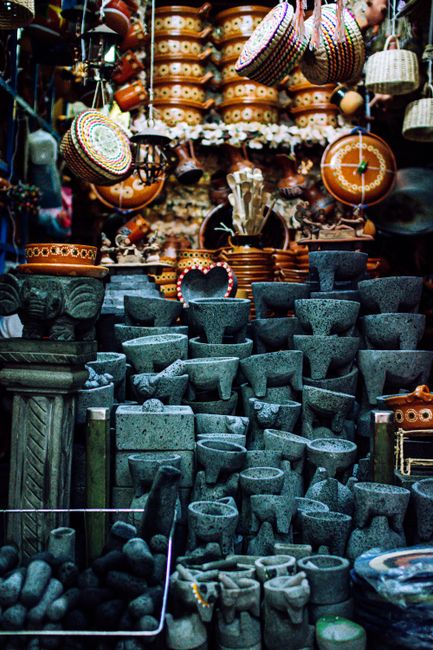
Oaxacan Artisan Shopping: What to Buy Near Puerto Escondido
Oaxacan Artisan Shopping: What to Buy Near Puerto Escondido
Oaxacan crafts are some of the most distinctive handmade goods in Mexico, and Puerto Escondido sits closer to their source than almost any other beach destination in the country. The state of Oaxaca is home to entire villages that specialize in a single craft passed down for generations — hand-carved wooden creatures, black clay pottery fired without a kiln, wool rugs dyed with cochineal and indigo. Here's what to actually buy, where to find it near Puerto Escondido, and how to tell an authentic piece from a factory copy.

Why Oaxaca Is a World Capital of Craft
Oaxaca has more recognized artisan traditions than any other Mexican state, and unlike many craft economies, production here is still organized by village rather than by factory. Teotitlán del Valle weaves, San Bartolo Coyotepec fires black pottery, San Martín Tilcajete and Arrazola carve alebrijes — each town's specialty is inseparable from its identity, and most pieces are still made by hand using techniques that predate the Spanish conquest. FONART, Mexico's national fund for the promotion of arts and crafts, certifies many of these artisans directly, which is worth knowing when you're deciding whether a piece is the real thing.

What to Buy: The Iconic Oaxacan Crafts
Not every souvenir shop carries the genuine article, so it helps to know what you're actually looking for before you start browsing:
- Alebrijes. Brightly painted wooden creatures — part animal, part fantasy — carved from copal wood and painted with intricate patterns. Originally from Mexico City, the craft was adopted and perfected in Oaxaca's valley villages.
- Barro negro (black pottery). Matte or polished black clay vessels, unique to San Bartolo Coyotepec, fired using a technique with no direct parallel elsewhere in Mexico.
- Hand-woven rugs and textiles. Wool tapetes from Teotitlán del Valle, often dyed with natural pigments like cochineal (red), indigo (blue), and pericón (yellow).
- Embroidered blouses (huipiles). Hand-embroidered garments from villages like San Antonino Castillo Velasco, each pattern tied to a specific community's textile tradition.
- Chocolate and mole paste. Ground cacao, spices, and mole ingredients sold as blocks or paste — a genuinely useful souvenir that captures a core flavor of the region.

| Craft | Village of Origin | Typical Price Range |
|---|---|---|
| Alebrije (small) | San Martín Tilcajete, Arrazola | 250–800 MXN |
| Barro negro pottery | San Bartolo Coyotepec | 150–1,500 MXN |
| Wool rug (small) | Teotitlán del Valle | 800–3,000 MXN |
| Embroidered huipil | San Antonino Castillo Velasco | 600–2,500 MXN |
Where to Buy Near Puerto Escondido
You don't have to leave the coast to find good Oaxacan craft — but the selection and prices are noticeably better the closer you get to the source villages themselves.
- In town. Puerto Escondido has a growing number of shops carrying curated selections of pottery, textiles, and alebrijes, mostly concentrated in Zicatela and La Punta. Our Puerto Escondido shopping guide covers the markets, boutiques, and where locals actually shop.
- Local markets. The town's produce and craft markets carry a rotating mix of goods from smaller cooperatives, often at better prices than boutique shops.
- A day trip to Oaxaca's Central Valleys. The craft villages themselves — Teotitlán, San Bartolo Coyotepec, San Martín Tilcajete — sell direct from the workshop at close to wholesale prices. If you're weighing whether that trip is worth the drive, our Oaxaca City day trip vs. overnight guide breaks down the logistics.

How to Buy Authentic, Not Mass-Produced
Cheap imitations of every craft on this list exist, often manufactured in bulk far from Oaxaca. A few ways to tell the difference:
- Look for small imperfections. Genuine hand-carved or hand-woven pieces have slight asymmetries — perfectly uniform patterns usually mean machine production.
- Ask where it was made. A legitimate seller will name the specific village and often the artisan or family workshop.
- Check for a FONART seal or cooperative certification when buying from a shop — it's a strong signal the piece is sourced directly from certified artisans.
- Compare prices. If a "hand-woven" rug costs less than a printed cotton throw, it almost certainly isn't hand-woven.
- Buy direct when you can. Purchasing at the village or from a cooperative puts more of the price directly into the artisan's hands than buying through a resort gift shop.
FAQ: Shopping for Oaxacan Crafts
What is the most famous Oaxacan craft?
Alebrijes and black pottery (barro negro) are probably the most internationally recognized, followed closely by the hand-woven wool rugs from Teotitlán del Valle.
Can I buy authentic Oaxacan crafts in Puerto Escondido, or do I need to go to Oaxaca City?
Puerto Escondido has a real selection in its shops and markets, but the widest range and best prices are in Oaxaca's Central Valleys, where the craft villages are located.
How much should I expect to pay for a genuine hand-woven rug?
A small hand-woven wool rug from Teotitlán typically runs 800–3,000 pesos depending on size and dye complexity — natural-dyed pieces cost more than chemically dyed ones.
Is it okay to bargain for handmade crafts?
Light negotiation is normal in markets, but keep it respectful — these are hours of skilled labor, not mass-produced goods, and aggressive haggling undervalues that work.
Can I bring wood carvings and textiles through customs?
Yes, handmade crafts like alebrijes, pottery, and textiles are standard souvenir items with no special import restrictions for most countries, though it's worth checking your destination country's customs rules for any agricultural material used in dyes.
Ready to see what's actually in stock? Check our Puerto Escondido shopping guide for the current markets, boutiques, and craft shops worth a visit.
auto_awesomeContinue exploring Puerto Escondido
You Might Also Like
 articleAdventurescalendar_todayNov 26, 2025
Puerto Escondido First-Timer’s Guide: Plan Your Perfect Trip
Welcome to Puerto Escondido, where rugged Pacific waves meet pristine jungle lagoons and Oaxacan culture thrives along o
 articleAdventurescalendar_todayApr 2, 2026
4 Days in Puerto Escondido: A Chapter-by-Chapter Itinerary for Travelers Who Want More
Four well-used days in Puerto Escondido: the fishing port at dawn on Day 1, the bioluminescent lagoon on Day 2, dolphins
 articleAdventurescalendar_todayMar 10, 2026
Puerto Escondido Expat Guide: Everything You Need to Know About Living Long-Term
Puerto Escondido has quietly transformed from a surfers’ secret into one of Mexico’s most compelling long-term destinati