Laguna Manialtepec Guide: Birdwatching, Kayaking & Bioluminescence in One Spot
Laguna Manialtepec Guide: Birdwatching, Kayaking & Bioluminescence in One Spot
Laguna Manialtepec sits 5 kilometres west of Puerto Escondido and gets mentioned constantly in trip reports and guidebooks — usually in passing, as a footnote to the bioluminescence. That undersells it dramatically. What you actually have is a 9-kilometre estuary system where you can watch roseate spoonbills at dawn, paddle through mangrove tunnels by mid-morning, and finish the day watching glowing water respond to your paddle strokes in the dark. No other spot along the Oaxacan coast combines these three experiences in a single day. This guide tells you exactly how to do each one.

What Makes Laguna Manialtepec Different
Laguna Manialtepec is a brackish estuary — freshwater rivers feed it from the Sierra Sur mountains while a narrow sand bar keeps it partially separated from the Pacific. This mixing of fresh and salt water creates an unusually productive ecosystem. The lagoon hosts over 200 recorded bird species, including several that require freshwater, mangrove, and open-water habitats to complete their life cycles. The same ecological conditions that attract the birds — warm, nutrient-rich, low-turbulence water — also happen to be perfect for Pyrodinium bahamense, the dinoflagellate responsible for the bioluminescent glow.
It’s also largely undeveloped. There are no resorts or beach clubs on the lagoon itself. What you get is a functioning ecosystem that happens to be accessible from a surf town. The combination rarely exists anywhere.
Birdwatching at Laguna Manialtepec
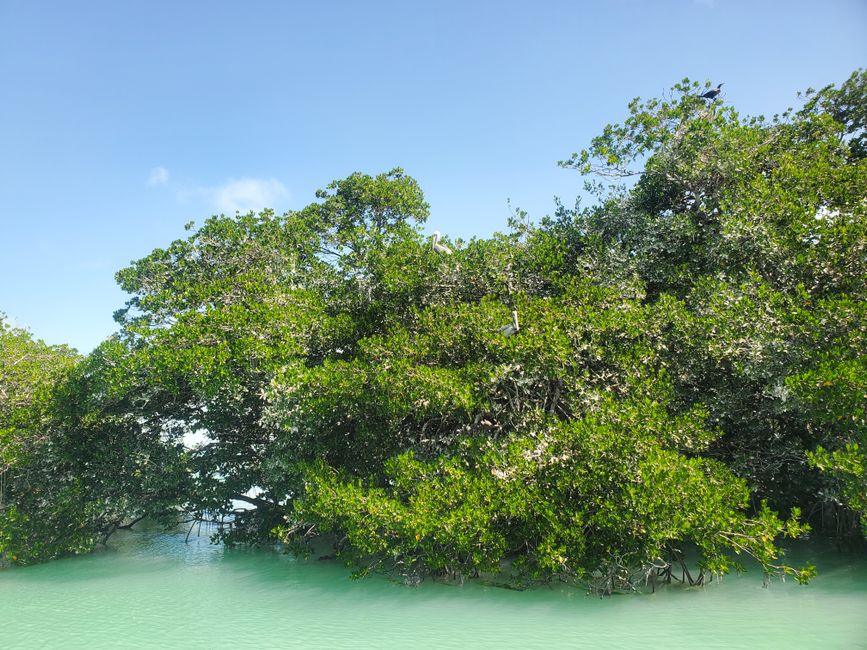
The best birdwatching window is 6:00–8:30 AM, before the first tour boats put birds to flight. The western mangrove channels — accessible only by kayak or small panga — are the most productive zone. A guided bird-watching tour with a local guide pays for itself immediately: they know the nesting trees, they read the calls, and they can navigate the narrower channels that solo visitors miss.
Species regularly seen at Laguna Manialtepec:
- Roseate spoonbill — the pink-winged signature bird of the lagoon; seen year-round but more numerous October–March
- Tricolored heron and great blue heron — stationary hunters along the mangrove edges
- Anhinga — dives for fish and dries its wings spread-eagled on branches (often called the “snake bird”)
- Ringed kingfisher — large and loud, perched on exposed branches over the water
- Boat-billed heron — nocturnal and cryptic; early-morning tours catch them before they roost
- Magnificent frigatebird — visible soaring high above the lagoon, especially near the ocean inlet
- Northern jacana — walks on floating vegetation on the inner lagoon; one of the more unusual sights
For a species list and migration data, the Cornell Lab of Ornithology’s All About Birds database has full range maps for every species above. October through March is the peak birdwatching season, when North American migrants join the resident population and the lagoon’s numbers are at their highest.


Kayaking the Mangrove Tunnels
The western arm of Laguna Manialtepec contains a network of mangrove tunnels — channels where the roots and branches of Rhizophora mangle interlock overhead to form a cathedral-like corridor of green. Some passages are less than two metres wide. Light filters through the canopy in shifting columns. It’s one of the strangest and most beautiful places you can reach by paddle in Oaxaca.
Guided kayak tours typically cover 5–8 kilometres over two to three hours, including stops in the tunnels and at open sections of the lagoon where crocodiles sun themselves on exposed roots. American crocodiles (Crocodylus acutus) are resident in the lagoon and routinely visible from kayaks — they’re not aggressive towards boats, but guides keep a respectful distance. Morning departures get the stillest water and the best bird activity. Late afternoon works too; the golden light through the mangrove canopy at 5:00 PM is worth going out for on its own.

The Bioluminescent Night Show
The bioluminescence at Laguna Manialtepec comes from Pyrodinium bahamense — a marine dinoflagellate that emits cold blue-green light when physically disturbed. Dip your hand into the water and your fingers trail blue fire. A fish passing below the surface leaves a glowing outline. A paddle stroke leaves a luminous wake that fades over 3–4 seconds. The effect is quiet and surreal and genuinely nothing like the heavily processed photos you’ve seen of bioluminescent lagoons.
The best conditions stack as follows: a new moon (less ambient light makes the glow more visible), warm water temperature above 25°C, and no heavy recent rainfall (fresh water dilutes the salinity and temporarily reduces organism concentration). These conditions converge most reliably from June through November, with August and September typically the brightest months. But the lagoon produces visible bioluminescence year-round — off-season tours are worth doing even if the peak-season conditions aren’t there.
Tours depart after 9:00 PM once full darkness falls. You paddle from the launch point into the inner lagoon, away from any light sources on the highway. No flashlights or phone screens once you’re on the water — your eyes need time to adjust. The bioluminescence tour lasts about 90 minutes and is one of the few experiences in Puerto Escondido that never gets old no matter how many times you do it.

Planning Your Visit: Practical Details
Laguna Manialtepec is 5 kilometres west of Puerto Escondido on Federal Highway 200. A taxi from the center takes about 15 minutes and costs 80–120 MXN. Colectivos heading toward Pinotepa Nacional pass the lagoon entrance; ask the driver for “La laguna.” Tours depart from a small boat ramp just off the highway.
| Activity | Best Time | Duration | Peak Season |
|---|---|---|---|
| Birdwatching | 6:00–8:30 AM | 2–3 hours | October–March |
| Kayaking | 7:00 AM or 4:00 PM | 2–3 hours | Year-round |
| Bioluminescence | After 9:00 PM | 90 minutes | June–November |
What to bring:
- Insect repellent — non-negotiable, especially for the evening bioluminescence tour
- Dry bag — for phones and cameras; splashing is inevitable
- Dark clothing for the night tour — no white shirts, which reflect any residual light
- Water — bring more than you think you’ll need in the heat
- Sunscreen and hat for daytime activities; the lagoon has little shade in the open sections
Frequently Asked Questions About Laguna Manialtepec
When is the best time of year to visit Laguna Manialtepec?
It depends on your priority. For birdwatching, October–March is the peak — dry season plus winter migrants from North America. For bioluminescence, June–November is best — warmer water and wet-season conditions concentrate the dinoflagellates. Kayaking is excellent year-round. Many visitors time a November visit to get strong birdwatching alongside still-good bioluminescence conditions.
Is bioluminescence guaranteed at Laguna Manialtepec?
No natural phenomenon is guaranteed, but Laguna Manialtepec is one of the most reliably bioluminescent lagoons in Mexico. The lagoon’s enclosed, nutrient-rich conditions sustain a permanent population of Pyrodinium bahamense. Some nights are brighter than others — new moon nights with warm, still water produce the most intense glow. Even on slower nights, the effect is visible and impressive.
Are there crocodiles in Laguna Manialtepec? Is it safe?
Yes, American crocodiles (Crocodylus acutus) live in the lagoon and are commonly seen during kayaking tours. They are not aggressive toward boats or people when given space — crocodile incidents at Laguna Manialtepec are extremely rare. Do not swim in areas where crocodiles have been sighted, and always go with a guide who knows the lagoon. The same applies to the bioluminescence tour — night swimming in the lagoon is not advised.
What birds can I see at Laguna Manialtepec?
The lagoon has recorded over 200 species. The most distinctive include roseate spoonbills, boat-billed herons, anhingas, ringed kingfishers, northern jacanas, and several species of egret. During peak migration (October–February), the species count increases significantly with North American winter visitors. Early morning guided tours consistently produce 30–50+ species in a single outing.
Can I visit Laguna Manialtepec independently without a guide?
You can reach the lagoon by taxi or colectivo, but accessing the interior — mangrove tunnels, deeper channels, bioluminescence zones — requires a boat or kayak. Independent kayak rental is available at the launch ramp. For birdwatching and bioluminescence specifically, a guide adds significant value: they know the active areas, read the conditions, and provide the safety backup that night activities on open water require.
Ready to experience Laguna Manialtepec for yourself? Browse our bioluminescence tours, birdwatching expeditions, and kayaking adventures — all guided by locals who know the lagoon inside out.
auto_awesomeContinue exploring Puerto Escondido
You Might Also Like
 articleAdventurescalendar_todayApr 4, 2023
How To Experience Magical Bioluminescence In Puerto Escondido
There’s no experience quite like witnessing the magical bioluminescence in Puerto Escondido. This natural phenomenon, ca
 articleBioluminescencecalendar_todayMar 10, 2024
Glowing Plankton of Puerto Escondido
Hello fellow travelers! My name is Sofia, and I am currently on an exciting adventure in Puerto Escondido Oaxaca. Today,
 articleBioluminescencecalendar_todayDec 30, 2023
Exploring Puerto Escondido’s Bioluminescent Bay: A Technical Perspective
Hello, it’s Sophia here, your travel companion and digital nomad. Currently, I am stationed in the picturesque paradise