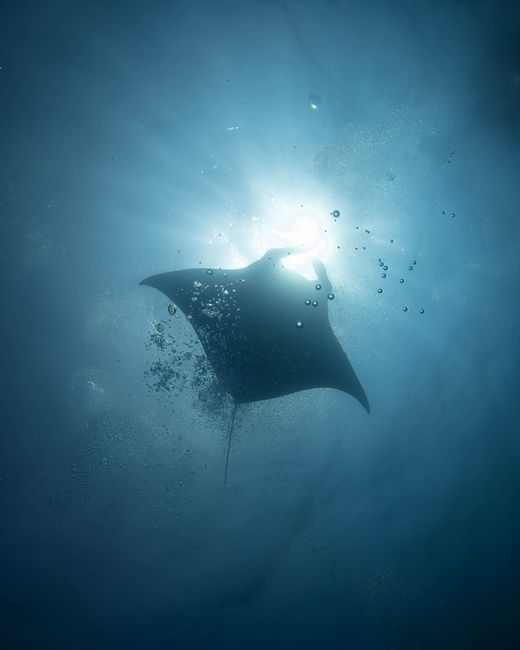
Manta Ray Season in Puerto Escondido: When & Where to Spot Them
Manta Ray Season in Puerto Escondido: When & Where to Spot Them
Search “manta ray Oaxaca” and you’ll find almost nothing — which is odd, because Puerto Escondido’s offshore waters see real manta ray activity every year and almost no one writes about it. Whale watching and turtle releases get all the attention here; mantas are the animal everyone forgets to ask about. Here’s what actually happens: when they show up, where boats find them, and what to expect if you go looking.

When Manta Ray Season Actually Runs
Manta rays move through the Oaxacan Pacific mostly between November and April, tracking the same nutrient-rich upwelling that draws humpback whales to the same stretch of coast. Sightings peak from January to March, when plankton blooms concentrate near the surface and mantas come up shallow enough for boats to spot their wingtips breaking water. Outside that window they don’t disappear entirely — they just go deeper and scatter further offshore, which makes summer sightings rare rather than impossible.

Where Boats Actually Find Them
Offshore Between Puerto Escondido and Puerto Ángel
Most manta encounters happen well offshore, in the open water between Puerto Escondido and Puerto Ángel, on the same routes whale-watching boats already run. Mantas aren’t reef animals here the way they are in the Maldives or Socorro — there’s no fixed cleaning station to stake out. Captains find them by reading the water: current lines, color changes, and pods of feeding seabirds all signal a plankton patch worth checking.
Near Punta Escondido & the Deeper Reef Breaks
Closer to shore, the deeper reef structure off Punta Escondido occasionally holds mantas feeding in the early morning, before the wind picks up and churns the water. It’s a longer shot than the open-water routes, but it’s the only spot where a strong swimmer with a snorkel and a bit of luck could plausibly see one without booking a boat.

How Manta Tours Differ From Whale & Turtle Tours
There’s no dedicated “manta ray tour” sold in Puerto Escondido the way there is for whales or turtle releases — mantas are a bonus sighting on wildlife or snorkeling boats, not a guaranteed target. That changes the way you should plan the trip: book a wildlife-watching or snorkeling tour that already covers the right offshore water, tell the captain you’re hoping for mantas specifically, and treat a sighting as a highlight rather than the whole point of the day.
- Best months: January–March, peak plankton bloom.
- Season range: November–April, tapering off outside peak.
- Best time of day: early morning, before wind and boat traffic pick up.
- Boat type: whale-watching or snorkeling charters running offshore routes — not glass-bottom tourist boats.
- Realistic expectation: a bonus sighting, not a guarantee — ask the captain if mantas have been spotted that week.
Manta Ray Season vs. Whale Season: Quick Comparison
| Species | Peak Months | Sighting Odds | Dedicated Tour? |
|---|---|---|---|
| Manta Rays | Jan–Mar | Bonus sighting | No — piggybacks on other tours |
| Humpback Whales | Dec–Mar | High, most days in season | Yes |
| Sea Turtles | Year-round, releases seasonal | Very high | Yes |
If you want the fuller picture of what’s in these waters year-round, our Puerto Escondido wildlife guide covers every species worth watching for, season by season.

Giant oceanic mantas (Mobula birostris) are filter feeders, not predators — they pose no threat and are classified as vulnerable worldwide, according to NOAA Fisheries. That status is part of why an unplanned Oaxacan sighting is worth taking seriously rather than treating as a footnote to a whale-watching trip.
Tips for a Real Sighting
Book the earliest departure a captain offers — morning glass-calm water makes wingtips and shadows visible from much further away than choppy afternoon seas. Bring polarized sunglasses; they cut surface glare and are the single biggest difference between spotting a manta and missing one. And ask around at the dock before booking: local captains talk to each other, and whoever saw one yesterday usually knows roughly where to look today.
FAQ: Manta Rays in Puerto Escondido
Is there really a manta ray season in Puerto Escondido?
Yes. Sightings run November through April and peak January to March, tied to the same plankton bloom that brings humpback whales to the coast. It's under-documented, but the pattern is real and known to local boat captains.
Can you swim with manta rays near Puerto Escondido?
There's no dedicated swim-with-mantas operation here. Most sightings happen from a boat in open water too deep for casual snorkeling; a close-range in-water encounter is possible but rare and unplanned.
What's the difference between a manta ray and a stingray in these waters?
Mantas are far larger, filter-feed on plankton near the surface, and glide in open water. Stingrays here are smaller, bottom-dwelling, and typically seen near shore or reef sand, not offshore.
Do I need to book a special tour to see manta rays?
No dedicated manta tour exists — book a whale-watching or offshore snorkeling tour during peak season and mention you're hoping to see mantas; captains running the right routes will keep an eye out.
What time of year has zero chance of manta sightings?
May through October is the weakest window — mantas move deeper and further offshore outside the upwelling season, making sightings uncommon rather than impossible.

Manta rays are the sighting Puerto Escondido never bothered to advertise — real, seasonal, and worth chasing if you time it right. Pair the search with a proper morning on the water and check our Puerto Escondido tours for the whale-watching and snorkeling charters most likely to put you in the right patch of ocean.